

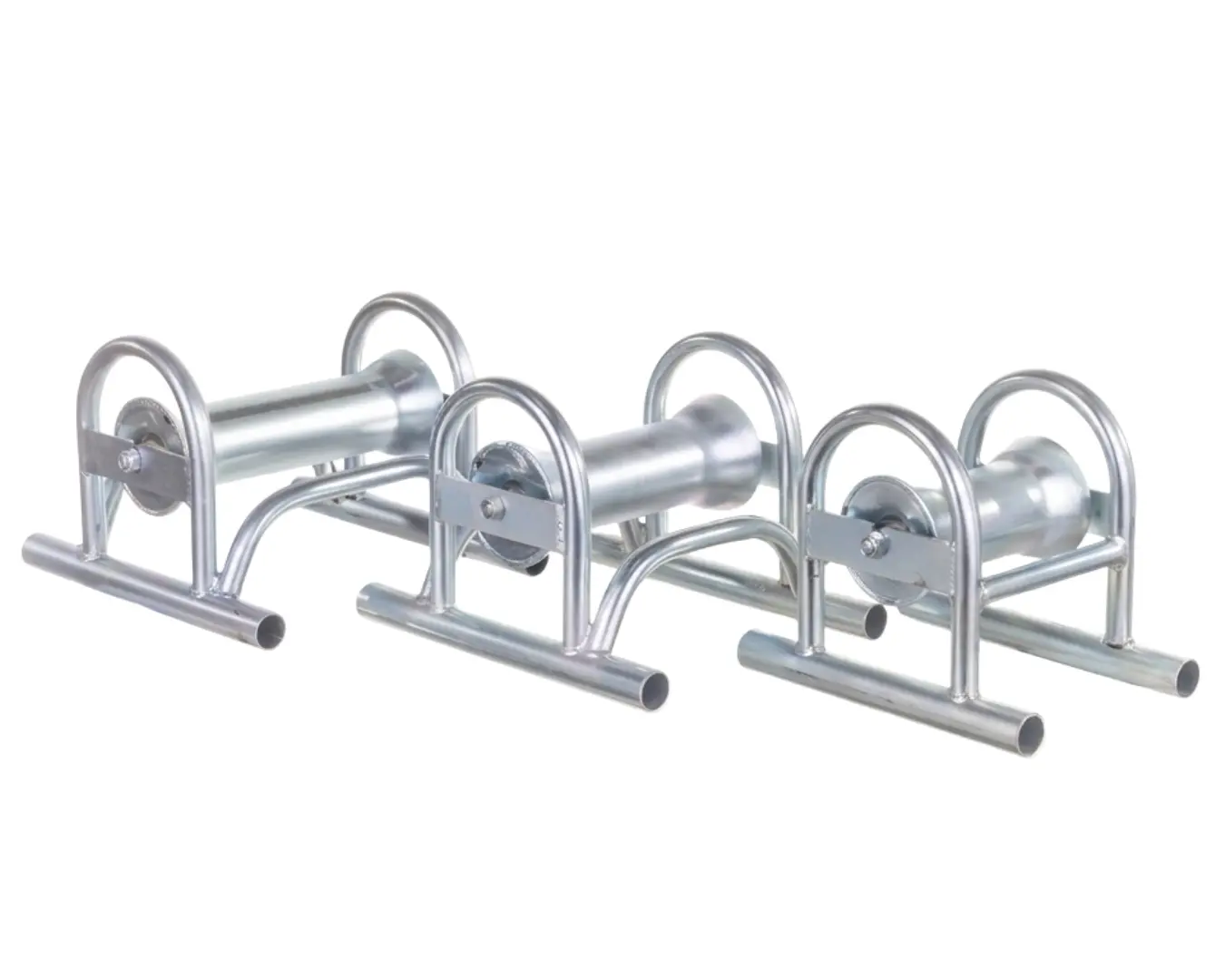
Proper cable laying is a process that requires not only precision but also the right equipment. Using cable rollers is the fundamental way to significantly reduce working time and eliminate the risk of damaging the cable sheath. In this post, we will look at the different types of rollers that are essential during professional installation work.
Why is it worth using cable rollers?
Our high-quality rollers are characterized by high durability and resistance to weather conditions – rain, snow, sun, or mud. Thanks to their solid construction and the use of ball bearings, these products can serve for many years, even in the toughest field conditions.
Types of cable rollers and their applications
- Straight Rollers (Standard): This is the most frequently chosen solution. They are made of galvanized steel, aluminum, or nylon. Steel models are lightweight thanks to the use of tubes, making them easy to transport. They are available in various dimensions (e.g., 185 mm, 250 mm, 300 mm) and configurations:
- On a base plate: A special steel plate protects the structure from sinking into soft ground.
- High versions: These allow for laying a larger amount of cable under the roller during pulling.
- Corner Rollers: Essential for guiding lines around bends and corners. They usually come as a set of three rollers (two vertical and one horizontal) mounted on a shared plate. This design reduces the bend radius, which protects the cable and extends the life of the device's bearings.
- V-Type Rollers: Specialized rollers designed for laying heavy cables or pipes. They feature a heavy steel frame and two bearing-mounted rollers set at an angle. These versions are used, among others, for guiding high-voltage (HV) cables and pipes with large diameters (up to 800 mm).
- Auxiliary and Specialized Rollers:
- Support rollers: With widths up to 1000 mm, facilitating cable guiding over long sections.
- Tray rollers: Dedicated to installing cables inside buildings or in technical ducts.
Inlets for cable wells
In addition to rollers, key elements include inlet rollers. They ensure the smooth entry of the cable into the protective pipe, shielding it from abrasion against the edges of the opening. The offer includes inlet rollers of various diameters, matched to standard cable duct systems.
Summary
Choosing the right equipment depends on the specific terrain and the parameters of the cable itself. Steel rollers perform excellently under heavy loads, while nylon rollers are valued for their lightness and resistance. By investing in professional rollers and bell mouths, you gain the certainty that the work will be performed safely and that the purchased equipment will survive many seasons of intensive use.
